
America’s Favorite Warlord, my new book on Afghanistan, is available for pre-order:
Stay tuned for the book launch later this spring!
War Stories
“No shit, there I was…”
Veterans often begin stories this way, because war stories (like fishing stories) are often exaggerated to convey the intended emotion to the audience. In other words, war stories tend toward bullshit. The “no shit” preface seeks to assure the audience: this one is authentic.
My new book, America’s Favorite Warlord, is a biography of an important Afghan ally in the Global War on Terrorism. But it started out with the telling of war stories. I wanted to see if I could apply the methods I had studied as a historian to the craft of storytelling.
“Oral history,” the collection of spoken interviews, is especially popular among military historians. I took my inspiration from pioneers like S.L.A. Marshall and Studs Terkel, who wrote about WWII. A lot of these old timers felt if you didn’t spend a lot of time talking to those on the ground, then you provided nothing but armchair criticism. And who wants to read that?
Instead of “once upon a time,” Afghan stories begin with, “buud, na buud”: literally, “it was, and it wasn’t.” The phrase captures something essential about war stories from many contexts. Most veterans have resisted attempts to make sense of their experiences, which may be impossible to communicate to the uninitiated, or even to fellow veterans who happened not to be in that place, on that chosen day. British poet Robert Graves believed it was impossible to tell a “true” war story that could be understood by nonparticipants. He argued readers should not believe a memoir about the First World War to be authentic unless it had “a high proportion of falsities” appended.
So I started my research with some “fake news,” a satire delivered in meme format. The image you see made the rounds on veteran social media accounts in early 2021, days after the January 6th riot at the U.S. Capitol.
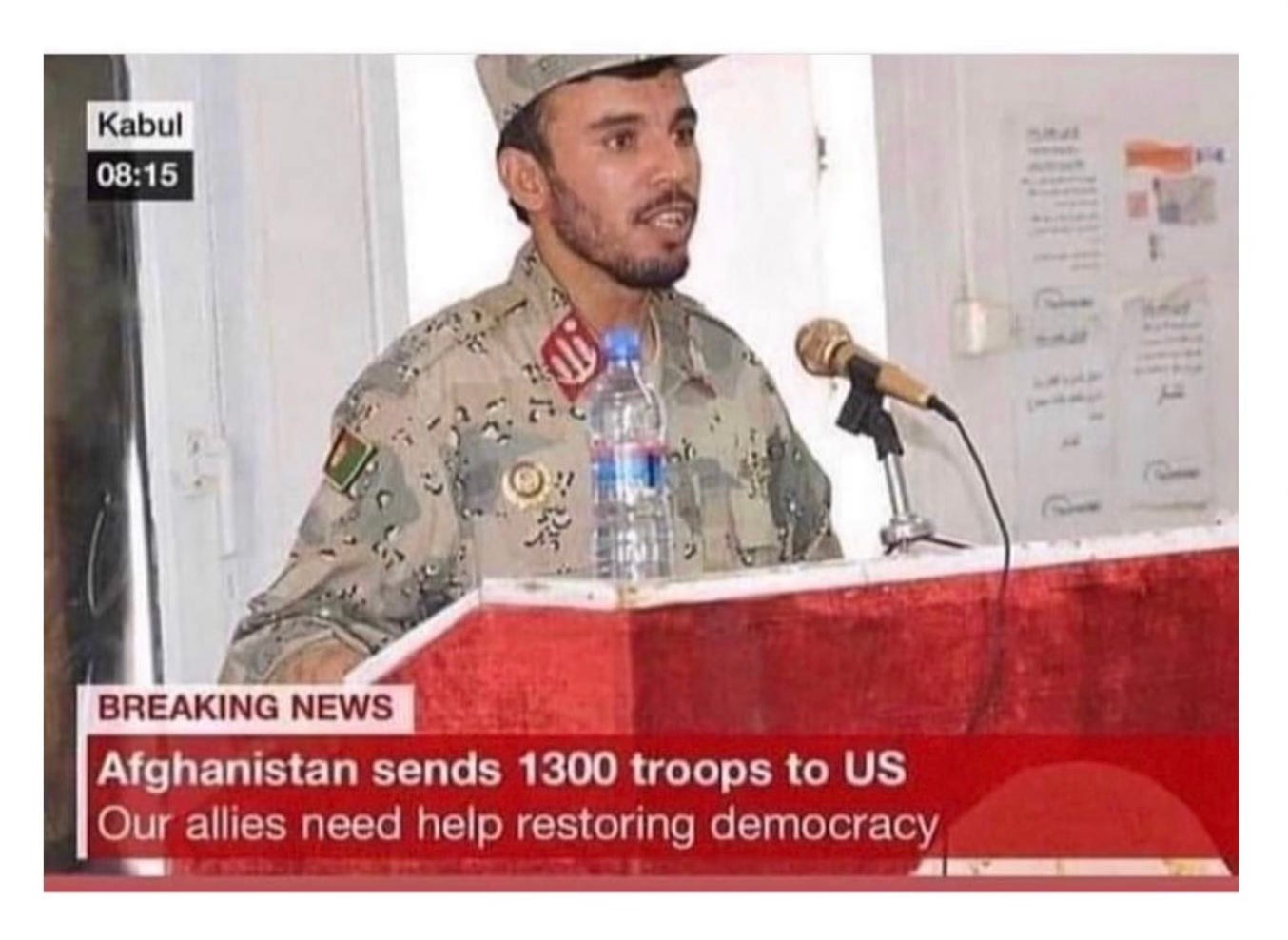
As the meme collected likes from jaded veterans, the State Department issued a warning that the events of that day would jeopardize Americans’ efforts to cultivate democracy, both at home and abroad. The meme was preposterous: of course nobody wanted a roguish strongman to help restore democracy. Yet this was the logic employed by American agents in Afghanistan and elsewhere.
My roommate at West Point, Thaddeus Fox, knew the guy pictured in that meme. General Raziq was a big part of his war story, and those of his comrades in the Saber Squadron, a cavalry unit deployed to the border crossing between Afghanistan and Pakistan in 2010. Their stories began: “No shit, there I was, surrounded by the forces of a fearsome warlord.”
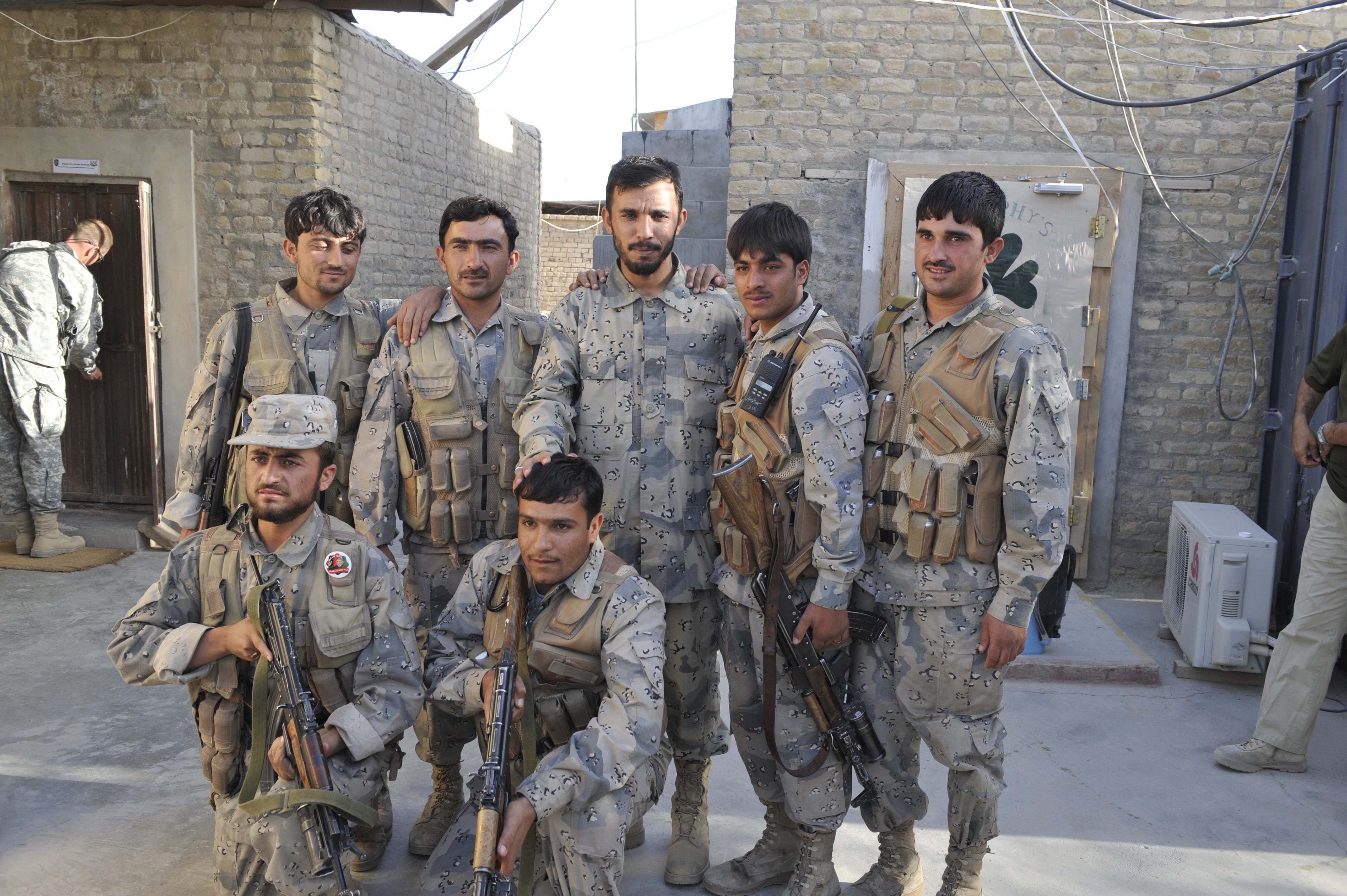
After a few of Thad’s tales, I was hooked. Raziq lived through a dramatic rise and fall, which tied together all the gritty elements of the Afghan war: drugs, corruption, torture, tribal politics, and the long shadow of Pakistan across the border. Through my friend, I gained access to many veterans. My own experiences in a different part of Afghanistan gave me the insights I needed to ask relevant follow-up questions. I conducted a “snowball” method of interviews, starting with Thad and the people he met during his deployment. I always asked interview subjects who was there before and after they were, so I built up a database of observations across General Raziq’s career, from his early days after 9/11 to his assassination in 2018. Eventually I compiled over 100 interviews, from Americans, Canadians, and Afghans, to include Raziq’s brother, along with a governor of Kandahar Province, and a mayor of Kandahar City.
I began my research thinking I would triangulate events from Raziq’s life with multiple sources, in order to sort out fact from fiction. But I found it more interesting to leave the fiction in. I wanted to analyze the growing number of contradictory ideas about Raziq that observers reported. Much of the book ended up being annotated hearsay. But I think the result is a more complete and accurate history of the times.
Oral history interviews helped me to assemble not only facts, but an evocative catalogue of myths, jokes, rumors, nicknames, proverbs, song lyrics. The unpredictable, creative medium of conversation dredges history up in such fragmented forms. An untidy inventory of images and analogies emerged, alongside sterile clichés that seek to explain how wars are won or lost. I began to see an opportunity in stitching together the fragments from my interviews into a cohesive story.
This book is the result.
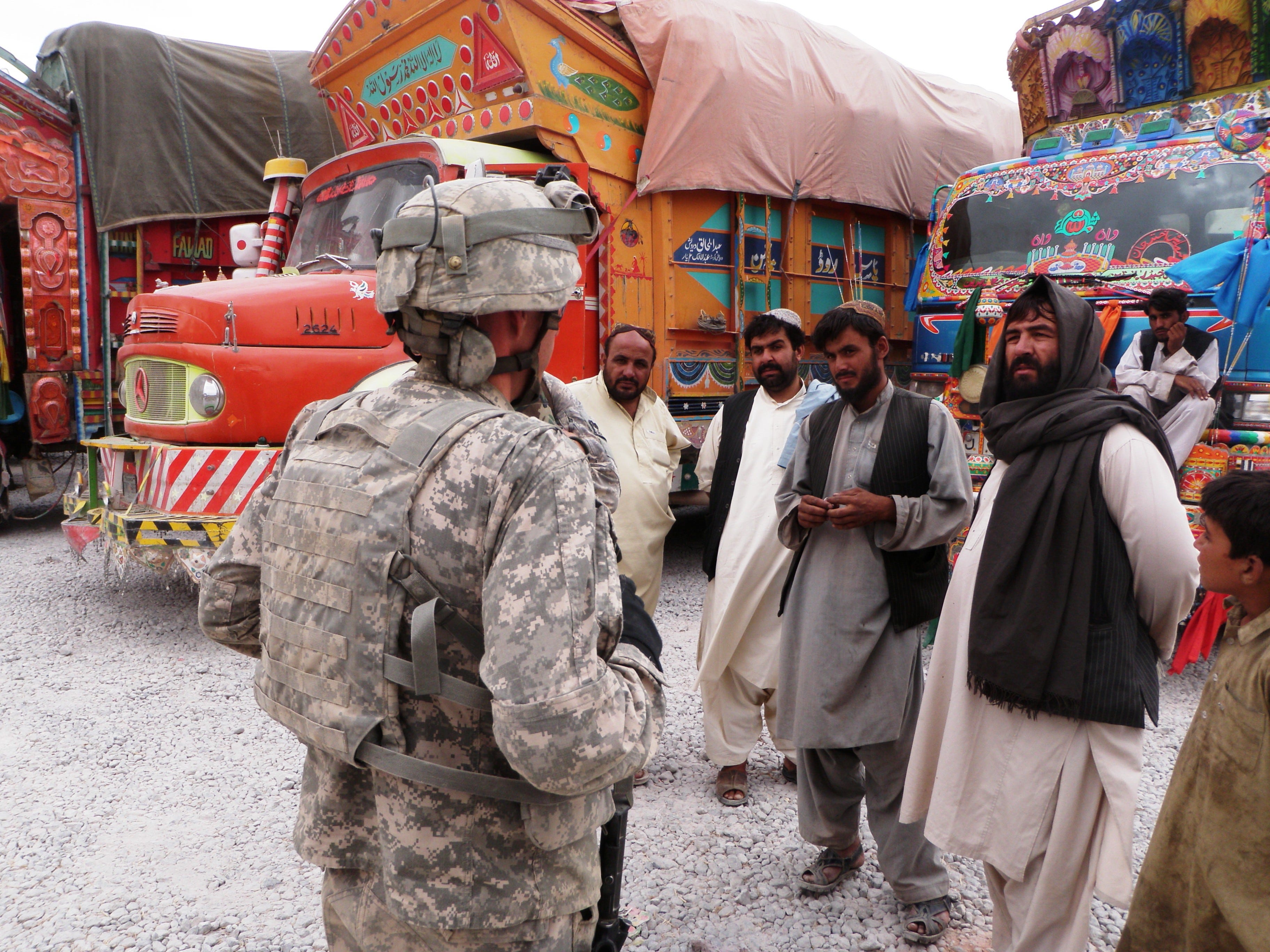
We think we know why the U.S. failed in Afghanistan. Most explanations point to Afghan partners, themselves. They were corrupt and incompetent. They stole supplies and smoked hash. They couldn’t do jumping jacks. They refused to keep their weapons clean, let alone their living quarters. An old saying, left over from the British era, cropped up in 21st century conversations: “you can rent an Afghan, but you can’t buy one.” Ask anyone who was there, and they will have stories to this effect.
But the excuse of the bad partner fell flat as I continued to collect interviews. Of course, incompetence was rife in the new Afghan security forces, constructed from the wreckage of decades of civil war. Of course, corruption ran rampant across one of the poorest regions on earth. These trends should not have surprised anyone, and they caused similar if not greater problems for the Taliban. Though unskilled or treacherous Afghans became common scapegoats to the nagging question of why the U.S. fell short of its goals, they cannot explain what happened. Buud, na buud, it was and it wasn’t.
The story of the American failure and the Taliban’s success goes deeper than tired truisms about Afghan backwardness. A closer look reveals examples of professionalism and heroism on both sides of the alliance. The American loss in Afghanistan resulted instead from two trends:
the cultural gulf between Afghans and foreign coalition forces, and
divisions within the American effort.
Raziq posed a problem for his partners, who disagreed about whether he was a sign of progress, or an omen of impending disaster. He represented the central paradox of counter-insurgency strategy: was it better to focus on establishing military security or government institutions? In other words, was it possible to install a democracy from the barrel of a gun?
Over the course of his career, Raziq acquired mythic proportions. To some, he was a corrupt war criminal, an evil “torturer-in-chief.” To others, he was the last, best hope to save the Republic of Afghanistan from Taliban rule. Experienced and intelligent observers characterized Raziq in these distinct ways. Each reader will have to decide, in the end, which war stories contain more truth.
America’s Favorite Warlord is available for pre-order:
click here to order yours today
Stay tuned for the book launch later this spring!

